Forged in Practice: The Unspoken Competencies That Make Kentucky Professionals Indispensable

There is a particular kind of professional competence that cannot be installed through a bootcamp, certified through an online course, or acquired during a summer internship. It is built incrementally, under pressure, in environments where the margin for error is narrow and the consequences of failure are immediate and measurable. Across Kentucky, that formation happens every day—in precision manufacturing plants, on working farms adopting cutting-edge agtech, inside barrel houses where time and chemistry must be managed with exacting care, and along distribution networks that keep national supply chains moving.
What is emerging from those environments is a workforce that possesses something increasingly rare in the modern labor market: genuine, transferable expertise rooted in tangible outcomes. And employers across the United States are beginning to pay close attention.
The Competency Conversation Coastal Markets Are Missing
Much of the national conversation about the skills gap focuses on technology adoption—the shortage of workers fluent in artificial intelligence, cloud infrastructure, or advanced data analytics. That conversation is legitimate, but it obscures a parallel deficit that is proving equally costly for employers: the shortage of professionals who can translate technical capability into real-world results.
Kentucky's regional industries have, almost incidentally, been producing exactly that kind of professional for generations. A process technician at a Louisville-area automotive supplier does not simply understand quality control in the abstract; she has spent years diagnosing variance on a live production line where a single miscalibration can halt an entire shift. A logistics coordinator managing freight through one of the state's major distribution hubs does not merely know what supply chain optimization looks like in a case study; he has rerouted shipments in real time during weather events, carrier failures, and demand surges that no simulation fully captures.
These are not soft skills. They are sophisticated, high-stakes competencies that transfer directly into roles across sectors—and they are precisely what many employers discover they cannot find, or cannot afford to develop, in markets where professional experience tends to be more theoretical.
Manufacturing Precision as a Transferable Discipline
Kentucky ranks among the top manufacturing states in the nation, with a particularly strong concentration in automotive production, aerospace components, and industrial equipment. The professionals who come up through those environments develop what might be called a precision mindset—an ingrained orientation toward process integrity, measurable tolerances, and systematic problem-solving.
Consider the case of a quality assurance engineer who spent a decade at a Tier 1 automotive supplier in the Bluegrass region before transitioning into a process improvement role at a national healthcare technology firm. Her employer, based in Nashville, initially sought a candidate with a formal background in lean methodology. What they discovered after hiring her was something more valuable: a professional who had not merely studied lean principles but had implemented them iteratively on a live floor, adapted them when they failed, and developed the institutional instinct to identify inefficiency before it became a defect.
That kind of formation does not appear on a certification list. But it shows up unmistakably in performance metrics.
Agricultural Innovation and the Data-Driven Field
Kentucky agriculture is no longer solely defined by tobacco and horse breeding, though both remain significant. The state's farming sector has become an early adopter of precision agriculture technologies—drone-assisted crop monitoring, soil sensor networks, GPS-guided equipment, and data platforms that allow producers to make planting and harvesting decisions with a granularity that would have seemed extraordinary a decade ago.
The professionals managing these operations—and the technicians, agronomists, and data analysts supporting them—are developing a cross-disciplinary fluency that is genuinely uncommon. They understand both the biological complexity of living systems and the data architecture required to monitor and optimize those systems at scale. When they bring that combination into industries such as environmental consulting, supply chain analytics, or even urban infrastructure planning, they offer employers a perspective that purely technical candidates rarely possess.
Bourbon Craftsmanship and the Discipline of Long-Term Process Management
No discussion of Kentucky professional competencies would be complete without addressing the bourbon industry, which has undergone a dramatic expansion over the past fifteen years and now represents one of the state's most economically significant sectors. What is less frequently examined is the professional culture that the industry cultivates.
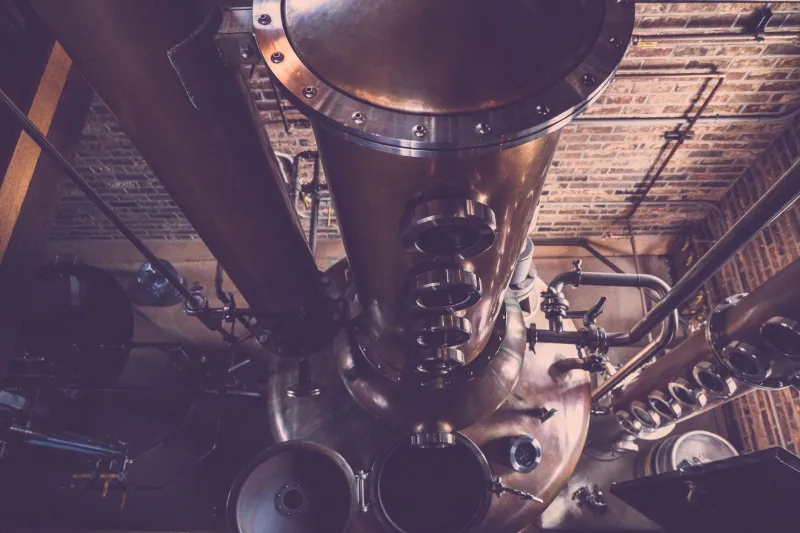
Managing a distillery operation requires a sophisticated synthesis of chemistry, logistics, regulatory compliance, sensory evaluation, and brand stewardship—all across time horizons that most industries do not encounter. A master distiller overseeing a twelve-year aged expression is making decisions today whose outcomes will not be evaluated until well into the next decade. That orientation toward long-term process discipline, combined with the need to maintain consistent quality standards across highly variable natural inputs, produces professionals with an unusually mature approach to risk management and quality assurance.
Several Kentucky distillery operations professionals have made notable transitions into pharmaceutical manufacturing, food safety consulting, and regulated logistics—fields where the combination of technical rigor and regulatory fluency is both demanded and difficult to find.
Logistics Excellence and the Architecture of Real-Time Decision-Making
Kentucky's geographic position at the intersection of major interstate corridors, combined with the presence of one of the world's busiest air cargo hubs at Louisville Muhammad Ali International Airport, has made the state a critical node in national and global supply chains. The professionals who operate within that ecosystem develop decision-making capabilities under conditions of genuine complexity and time pressure.
Those capabilities—rapid triage, cross-functional coordination, contingency planning, and clear communication under operational stress—are precisely what organizations in sectors from e-commerce to healthcare distribution are seeking when they describe wanting candidates who can "hit the ground running." Kentucky logistics professionals, in many cases, have been running at full speed for years.
What This Means for Employers and Talent Seekers
For employers navigating a competitive hiring environment, the implication is straightforward: regional experience is not a consolation prize. In many cases, it is a differentiator. Professionals formed in Kentucky's demanding industrial and agricultural environments bring a practical competence that complements—and often accelerates—the value of more conventionally credentialed candidates.
For professionals in Kentucky considering how their experience translates to new markets or industries, the message is equally clear: the skills developed in a precision manufacturing plant, a working distillery, a modern agtech operation, or a high-volume distribution center are not parochial. They are portable, they are in demand, and they are increasingly recognized as such by employers who have learned, sometimes through costly experience, what it means to hire for credentials while neglecting to hire for capability.
At TalentHub KY, connecting that demonstrated capability with the employers who recognize its value is precisely what we are built to do. The bridge between Kentucky's exceptional professional talent and the organizations that need it most runs directly through an understanding of what that talent is truly worth—and this conversation is long overdue.