Beyond the Bluegrass Belt: Discovering Exceptional Talent in Kentucky's Overlooked Regions
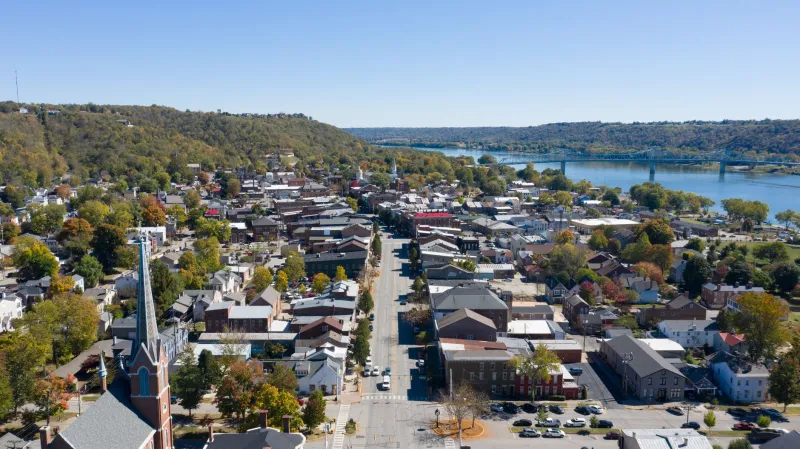
When most employers think about recruiting in Kentucky, their mental map stops at two cities. Louisville anchors the northwest. Lexington holds the center. Everything beyond those coordinates tends to blur into a vague impression of rural Americana—scenic, perhaps, but not particularly relevant to a talent acquisition strategy.
That impression is not just incomplete. It is costing employers access to some of the most capable, specialized, and genuinely committed professionals in the American workforce.
Kentucky is a large and geographically diverse state, and its professional talent is distributed accordingly. From the manufacturing corridors of Eastern Kentucky to the creative communities quietly flourishing in mid-sized cities like Paducah, Bowling Green, and Owensboro, the Commonwealth contains talent networks that remain largely invisible to employers who have not made the effort to look. This is an opinion worth defending, and the evidence supports it.
Eastern Kentucky: Engineering Depth in an Unexpected Place
The narrative around Eastern Kentucky has, for decades, been defined almost entirely by the decline of the coal industry. That narrative is not inaccurate, but it is dangerously incomplete. What it omits is the extraordinary concentration of engineering, mechanical, and technical expertise that accumulated in the region over more than a century of industrial development—and that has not disappeared simply because the primary industry that produced it has contracted.
Professionals who built careers maintaining and operating complex extraction equipment, managing large-scale logistics operations, and solving the kinds of engineering problems that arise in demanding industrial environments carry skills that translate directly into manufacturing, energy, infrastructure, and advanced logistics sectors. These are not generalists. They are specialists forged in conditions that demanded precision, adaptability, and the ability to diagnose and resolve problems with limited resources and significant consequences for failure.
Regional workforce development organizations in communities like Pikeville, Hazard, and Prestonsburg have spent years working to connect this talent pool with employers who can offer sustainable opportunities. The employers who have engaged seriously with these networks—particularly those in advanced manufacturing and renewable energy—have consistently reported finding professionals whose practical expertise exceeded what their credentials alone would have suggested.
The Paducah Creative Economy: A Genuine Surprise
Paducah sits in the far western corner of Kentucky, on the Ohio River, with a population that would not register on most talent market analyses. It is also home to one of the more quietly remarkable concentrations of visual arts, design, and craft-based creative talent in the mid-South—a product of the city's designation as a UNESCO Creative City and its long-standing investment in arts infrastructure.
For employers seeking graphic designers, illustrators, textile artists, and visual communicators who combine genuine craft with professional discipline, Paducah's creative community represents an underexploited resource. These are not hobbyists; many are working professionals with national client lists who have chosen to remain in Paducah precisely because the community supports their practice and their quality of life in ways that larger cities no longer can.
The digital nature of creative work makes geography largely irrelevant to delivery, which means an employer in Chicago, Atlanta, or San Francisco can access Paducah creative talent with no meaningful friction. The more pressing question is whether those employers know to look—and most, at present, do not.
Bowling Green and the Automotive Talent Cluster
Bowling Green occupies a specific and important niche in Kentucky's industrial landscape. Home to the Corvette assembly plant and a dense ecosystem of automotive suppliers, the city has developed a professional workforce with deep expertise in precision manufacturing, quality systems, supply chain management, and automotive engineering.
This cluster extends well beyond the assembly floor. Bowling Green's talent pool includes professionals with advanced experience in lean manufacturing methodologies, quality assurance systems, and the kind of cross-functional operational knowledge that develops only in complex, high-stakes production environments. Western Kentucky University's presence in the city adds a consistent pipeline of graduates who are recruited locally and often remain in the region after completing their degrees.
For manufacturers and industrial firms outside the automotive sector, this talent cluster represents a significant opportunity. The skills developed in automotive manufacturing are highly transferable, and professionals from Bowling Green's industrial community bring with them a standard of operational discipline that employers in adjacent sectors consistently describe as exceptional.
Owensboro and the Quiet Professional Class
Owensboro, Kentucky's fourth-largest city, is frequently overlooked in talent conversations that default to the Louisville-Lexington axis. That oversight is difficult to justify on the merits. The city has a diversified economic base spanning healthcare, manufacturing, agribusiness, and professional services, and it has produced a professional class that is, by most observable measures, exceptionally well-suited to the demands of contemporary knowledge work.
Healthcare professionals from Owensboro Health's regional system, finance and accounting professionals from the city's established business community, and operations managers from its manufacturing sector represent a cross-section of mid-career talent that is both highly skilled and genuinely interested in remote and hybrid arrangements that allow them to remain in a community they value.
The practical implication for employers is straightforward: Owensboro professionals are not waiting to be relocated to a larger market. They are looking for employers sophisticated enough to engage them where they are.
How to Access What You Cannot Easily See
The challenge with Kentucky's regional talent corridors is not that they are inaccessible. It is that they require a different kind of effort than posting to a national job board. The professionals in these communities are not, as a rule, actively circulating their resumes through conventional channels. They are embedded in local professional networks, connected to regional employers and community organizations, and largely invisible to recruiters whose search strategies begin and end with major metropolitan databases.
Accessing these networks requires genuine engagement with regional intermediaries: workforce development boards, community and technical colleges, regional chambers of commerce, and local professional associations. It requires a willingness to travel—or at minimum, to invest in relationships with people who know these communities from the inside.
At TalentHub KY, connecting employers with exactly these kinds of regional talent networks is central to our purpose. The professionals working in Kentucky's smaller cities and rural communities are not a consolation prize for employers who could not attract urban talent. In many cases, they are the most compelling option available—if only the right employers knew where to look.